The Berkeley Heights BOE will meet tomorrow (Thursday 12/11/2025) for its last meeting of the year. This will also be Dipti Khanna’s last meeting as a BOE Member as she chose not to run for re-election. Javier Morales will be a new addition next year.
This meeting begins with the 2024 to 2025 audit and is one of the most important financial events on the school calendar. As in recent years the Business Office continues to submit the audit document to the state before Board and public review. The ACFR can be found here. Still when you consider that the 2024 audit was presented in 2025 this is (sort of) an improvement?
Last year’s audit produced two findings that connected to four financial control failures that involved a missing approval signature on checks, failure to record cash receipts, inaccurate reporting on the district’s application for state aid and missing documentation for low income students.
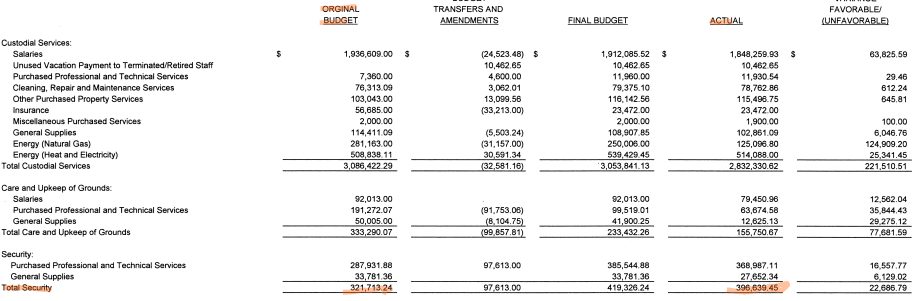
One significant note about this year’s ACFR is another massive increase in security spending (+130,000 from the prior year and 70,000 over the original budget).
At the last meeting I questioned why two police officers were being paid to stand around during a BOE Meeting.
After comparing the ACFR to the budget approved earlier this year I sent the following email to the BOE:
Good Evening,
I have a question about the ACFR that I hope the District can answer and, if they dont, that the BOE seek answers to during the public meeting on Thursday.
On the final 2024-2025 final budget provided to me last year the final proposed budget number was $324,643.
On this year’s ACFR the final budget amount was 419,326.24 and the actual spent was 396,639.45. The ACFR makes it seem as if we underspent on the final budget by ~20k when in reality we overspent by 70k.
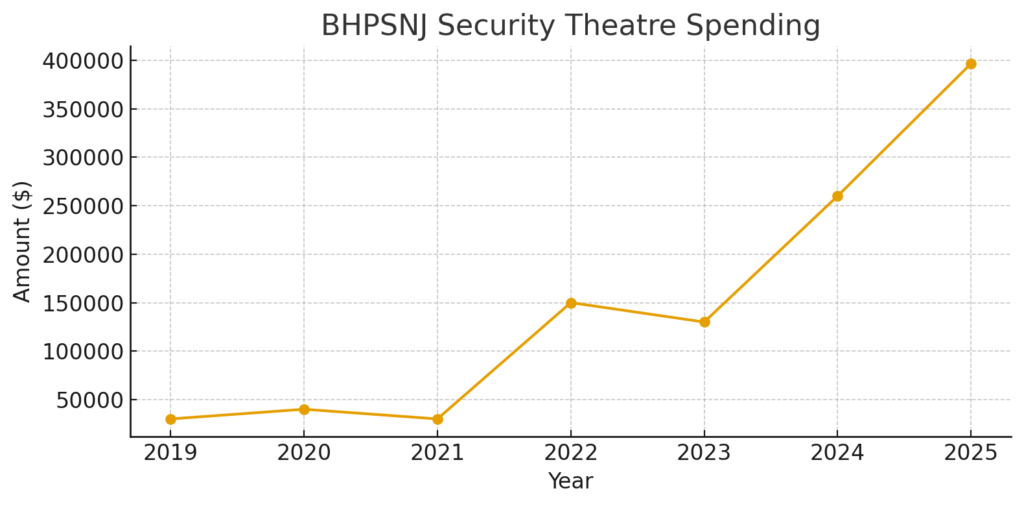
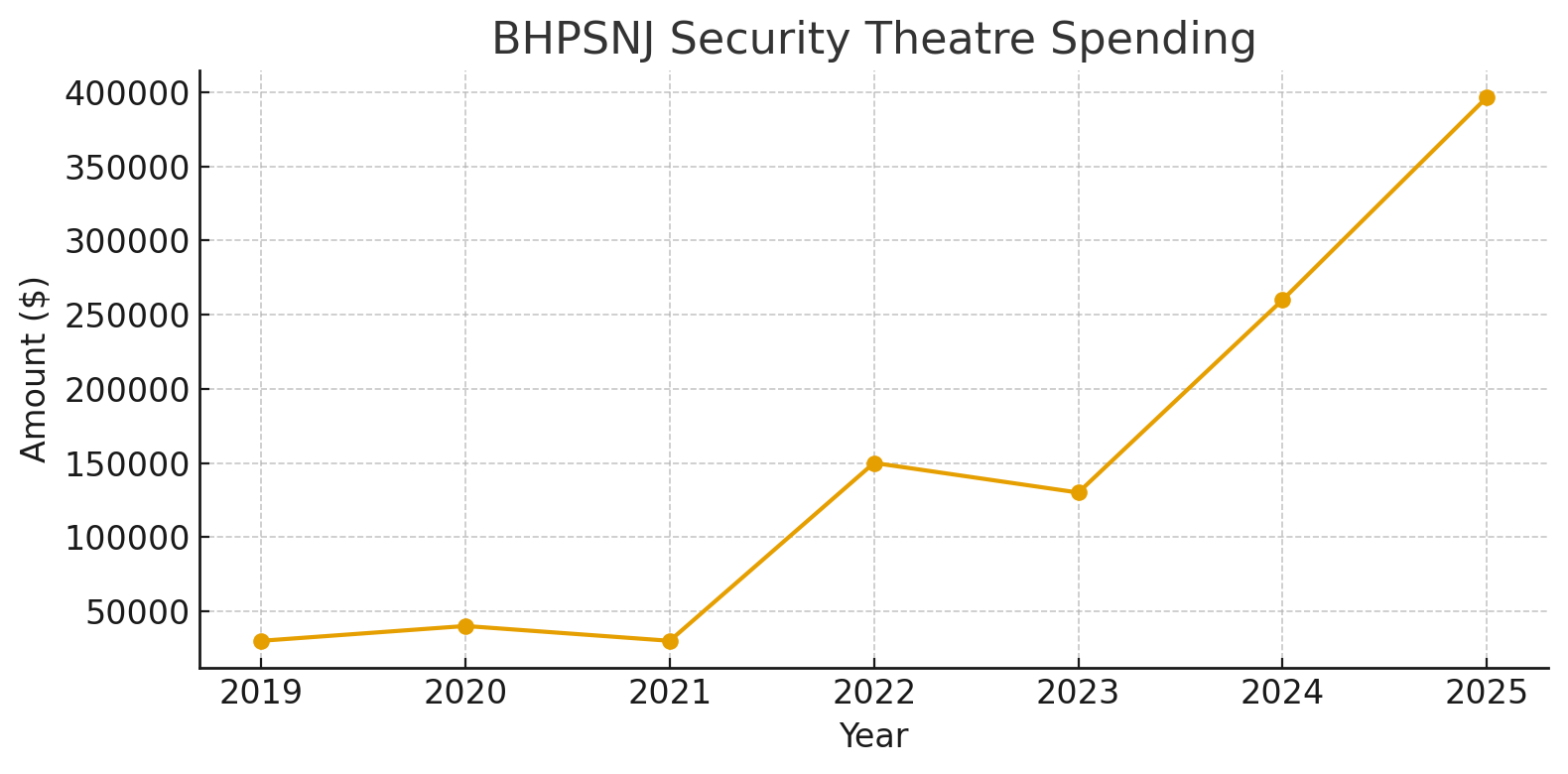
Here is the trajectory of security spending over the past few years based on the ACFR:
Why is the Final Budget on the ACFR nearly 100k more than what was indicated on the approved budget?
What dangerous terrible things have happened in Berkeley Heights over the past five years that necessitated going from spending under 50k in security to almost 400k?
What is the metric being used to justify this spending?
This is nearly 350k that could have gone directly to benefitting students academically.
Can you explain how this spending benefits students more than tutoring?
Can you please provide me the detailed outcomes to this massive expenditure?
Are the police providing the students with support in Math and Science?
Is the ID Scanner providing counseling to students… maybe its running some kind of support group?
Thanks in advance for your responses.
John Migueis
This massive amount of security spending in a low-crime, small community whose schools enrollment numbers continue to decline along with it’s proficiency scores raises significant questions as to whose interests are being served.
Thursday’s agenda also includes two major federal grant funded instructional initiatives. A 21,950 package aimed at strengthening the district’s Multi Tiered System of Supports training, coaching and manual development and a $7,500 professional learning series focused on Sheltered English Instruction intended to support multilingual learners.
Another significant item is a proposed telecommunications upgrade that would convert remaining copper based phone lines to LTE service and disconnect the district’s aging PRI system. The upgrade includes one time installation costs of $2,093 and an annual recurring cost of $7,822.
The Ryvicker family is donating Dr. Dish All Star Plus shooting machine valued at $6,484.93 for the Governor Livingston boys basketball program which the BOE will likely vote to accept.
A big chunk of the agenda involves personnel actions listing temporary reassignments, long term substitute placements, extra teaching period stipends and leave approvals across multiple schools. All of these highlight the level of movement occurring mid-year particularly in special education, physical education, ABA instruction and nursing services. There is also an item seeking a temporary increase in the GLHS school nurse position from 0.5 to 0.8 FTE through March.
In addition the district is seeking approval for its summer 2026 remedial and extended school year programs which will run from late June through early August.
The board will take on second readings of several policy revisions we covered last month including updates to the grading system and new regulations tied to library and instructional materials. The grading policy is of particular interest as it represents a concrete step in the BOE starting to finally take action on classroom instruction which may be a sign that more changes intended to turn around problematic proficiency rates are coming.
See All Articles on BOE Agendas and Meetings
|
Related Articles

Westfield’s School Budget Looks Deliberate, But Not Beyond Scrutiny
Chatham School Budget: High Spending, Mixed Priorities, Slipping Results