– Edmund Tom Maciejewski
Berkeley Heights voters should vote NO on the $50 million school facilities referendum this March 10.
Why?
Because despite rosy claims of “no tax increase” and state aid windfalls, this plan is misleading and poorly prioritized. It asks taxpayers for an enormous $50 million – roughly $500 per household – while presenting it as painless. In truth, rejecting the referendum would lower your taxes, and a “Yes” vote effectively approves a hidden tax hike. Moreover, the proposal bundles truly necessary repairs with expensive “nice-to-have” projects of dubious benefit to students. Combined with concerns about financial accountability, a rushed special-election timing, and even a split within the Board of Education itself, the only responsible choice is to VOTE NO and demand a better plan.
What the Referendum Proposes (and How It’s Framed)
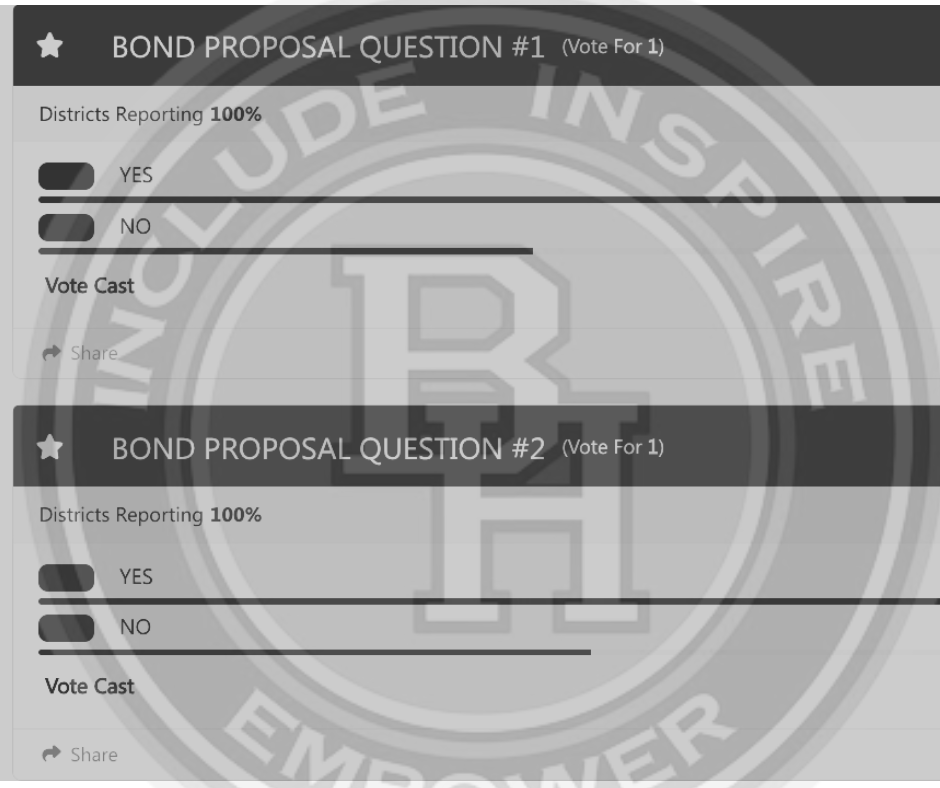
The referendum is split into two ballot questions: Question 1 covers about $21 million in projects and Question 2 another $29 million, totaling ~$50 million. The district touts Question 1 as a “tax-neutral” bond – i.e. it replaces retiring school debt so that passing it would not increase the current school tax rate. Question 2 contains the rest of the upgrades and would raise taxes by about $250 per year for the average Berkeley Heights home (assessed ~$319k). Both questions must pass for the full plan to be implemented. Officials emphasize that the state will cover ~33% of the costs if approved, portraying this as a rare opportunity. They argue that the schools urgently need upgrades – from leaky roofs and aging boilers to outdated science labs, libraries, and even a TV studio – which supposedly “cannot be paid for out of the normal budget”. The fear is put bluntly in pro-referendum messaging: if it fails, “critical fixes and improvements may not happen” and the costs would have to come from the regular budget, “which could mean cuts to teachers, school programs and much more”. Supporters also insist that modern facilities are needed to “stay competitive” with neighboring districts (noting that towns like New Providence, Madison, and Watchung recently passed school bonds) and to protect property values in our town. In short, the case for “Yes” centers on safety and infrastructure fixes, modernized learning spaces, state cost-sharing, and claims of “no tax impact” for Q1.
“No Tax Impact” – A Misleading Claim
The $0 tax increase promise for Question 1 is technically true only in the narrow sense that your school tax rate would stay the same if Q1 passes. But that’s because the district deliberately sized Q1 to match the debt that’s about to be paid off. If no new bonds are issued, that expiring debt would come off the books – and your taxes would go down. In other words, the “tax-neutral” framing hides the fact that approving Q1 means giving up a tax cut. Homeowners won’t see their taxes drop as they otherwise would once old loans are paid – the district will simply keep taxing the same amount to fund these new projects. It’s effectively a tax hike by preventing a reduction. And if both Q1 and Q2 pass, there will be an increase: about $250 more per year on the average home. That works out to roughly $500 in annual taxes per household that voters could avoid by rejecting both questions. It’s disingenuous for the referendum’s backers to imply that a $50 million spending plan can magically have “no tax impact.” The reality is that voting NO delivers a tax break to residents (as the old debt sunsets), whereas voting yes locks in the current tax level and adds even more on top for Q2. Don’t be fooled by the “no additional tax increase” sleight-of-hand – keeping taxes flat is not the same as them staying flat if we don’t spend $50M. The district itself has admitted it structured Question 1 “equivalent to the debt rolling off”, proving that “no increase” simply means “we’ll take the money you would have saved if we didn’t borrow again.” This kind of wording is misleading and erodes trust. Taxpayers should think in terms of their actual bill: a NO vote means a lower bill; a YES vote means you continue paying as if the debt never ended (and even more if Q2 passes).
Questionable Priorities: Libraries & Studios vs. Leaky Roofs
Perhaps the biggest red flag is what the referendum chooses to fund first. Question 1 – the supposedly essential, no-tax piece – is loaded with projects that many parents and teachers did not consider top priorities, while some truly critical fixes were pushed to Question 2. Specifically, Q1 is packed with renovations to school libraries (media centers) at every school and an upgrade of the high school TV studio, along with various security, technology, and site improvements. Meanwhile, major infrastructure needs – like replacing aging roofs at the high school, middle school and an elementary school, and fixing old HVAC and plumbing systems – were relegated to Question 2.
Why is this concerning?
Because if only Q1 passes and Q2 fails, the district will get its fancy library makeovers and studio renovation without fully addressing the leaking roofs and faltering heating systems that actually disrupt education. In fact, even the referendum outreach acknowledged that roofs and HVAC failures have already caused school closures and emergencies (Columbia and GLHS were closed multiple times last year due to plumbing or heating breakdowns). By the district’s own admission, “the majority of items in Question 2 are quite significant and have impacted instruction and continuity in learning”, including incidents like burst pipes, no heat (students wearing jackets in class), and roof leaks causing classroom interruptions. So why on earth were these “must-do” items put in the optional second question? It appears the architects and board deliberately split the referendum this way to keep Q1’s price-tag “tax neutral”.
As Superintendent Dr. Feltre (and the architects) explained, they couldn’t fit all needed projects into a single question without raising taxes, so they chose to pack Q1 with a grab-bag of lower-priority upgrades that fit within the retiring debt limit, and lumped many core infrastructure fixes into Q2. This is a strategic move – but one that does a disservice to voters and students. It creates a perverse all-or-nothing scenario: “We need both questions to pass to sufficiently address the capital projects and educational projects,” the superintendent said. In other words, the plan is engineered so that if taxpayers don’t approve the entire $50 million, the schools won’t get many of the repairs that are arguably most urgent. It’s almost a form of political hostage-taking: “Approve everything, or we might not fix the leaky roofs.”
Even some Board of Education members and community leaders have criticized this approach. They note that the district’s own stakeholder survey ranked the library/media center renovations among the lowest priorities, yet those appear in Question 1. Meanwhile, the highest-support projects – like roof repairs – were oddly placed in the “might not pass” question. This mismatch suggests the referendum is not truly aligned with what the community finds most urgent. At a recent board meeting, pointed questions were raised: Why aren’t the items from Question 2 (the ones that “will and have impacted instruction”) the priority in Question 1 if improving the classroom experience is the goal? The answers were not reassuring – basically, because of the tax strategy. This should give voters pause: the plan’s structure prioritizes optics (no immediate tax hike) over substance (addressing the worst facilities problems first).
Underused Libraries and an Outdated TV Studio – How Much Will These Help Students?
Let’s examine two of the biggest ticket “educational” projects in Question 1: renovating all school libraries (also called media centers) and upgrading the high school’s television studio. There’s no doubt these spaces could use some updating – many were built decades ago – but we must ask: are they pressing needs that justify millions in debt? Current evidence suggests these facilities see limited student use in their current form. According to district data and parent observations, school libraries are actually “among the least-used spaces” day-to-day. Elementary classes visit the library perhaps twice a week as part of a rotation. At Columbia Middle School, some parents report their kids “never even set foot in the library” outside of maybe a special event.
At Governor Livingston High School, access to the library (IMC) is often restricted – typically only 30 students at a time can use it during lunch or study hall, turning it more into a quiet lounge for a handful of kids. Simply put, our students spend the vast majority of their school day in classrooms, not libraries. The district’s hope is that if we build gleaming new media centers, they “will be utilized more”. Maybe – a refreshed space with new technology could attract more classes. But it’s far from guaranteed, since schedules and curriculum (not just furniture) dictate how often libraries are used. Is this a gamble worth prioritizing over fixing basic infrastructure? Similarly, consider the GLHS TV studio. The referendum would pour money into renovating and possibly expanding the high school’s in-house TV/media production studio. This studio serves a handful of students in elective media classes or club activities – it’s not a facility that impacts every student’s daily learning. Yes, the current studio is “outdated and undersized,” as the district says, and upgrading it could enhance the experience for those interested in broadcasting or video production. But we should ask tough questions: How many students will directly benefit from a state-of-the-art TV studio? Is this 1980s-style facility even crucial in an era where digital media creation can often be done with a decent camera, green screen, and computer?
Schools across the country have found creative ways to do morning news broadcasts or film projects without million-dollar studios. Enhancements to this program would be nice, but are they more urgent than, say, science labs that all students use for required courses? In fact, many residents have wondered why the referendum put libraries and a TV studio ahead of upgrading science labs and STEM classrooms. Modernizing labs is listed in Question 2 – meaning it won’t happen unless the extra $29M is approved. This is ironic, considering the district’s own examples of academic shortcomings cite science lab issues: students at GLHS reportedly have to watch videos of experiments “instead of doing them themselves” due to broken equipment and lack of power/internet capacity in the labs.
Shouldn’t that problem be fixed before we worry about redesigning the library where kids hang out during lunch?
The order of priorities in this plan simply doesn’t make sense if the goal is to improve educational outcomes. It hints that the project list was driven by what fit in a tax-neutral package, rather than what is genuinely most impactful for students. To be clear: Up-to-date libraries and creative spaces can be great assets to a school. But pumping millions into those areas while basics like plumbing, heating, and academic labs lag behind is a classic case of putting the cart before the horse. Students can’t learn in 21st-century libraries if the building’s 1950s boiler keeps breaking and shutting down classes. Nor will a high-end media studio make our district “competitive” if our math and reading scores continue to slip. As one local watchdog group noted, in recent years Berkeley Heights has had one of the highest per-pupil spending rates, yet one of the lowest performance rankings among comparable districts. That suggests our problems won’t be solved simply by fancy facilities – we need to fix fundamentals and spend smarter.
Maintenance & Accountability: Why Weren’t These Fixes Done Sooner?
Many taxpayers are asking a reasonable question: If our schools needed new roofs, boilers, and other repairs, why wasn’t this handled through regular maintenance budgets over time? Public schools are supposed to plan for capital maintenance – setting aside funds for roof replacements, heating upgrades, etc., as these needs are predictable. Berkeley Heights school officials acknowledge that several major systems are at end-of-life simultaneously, but the district’s capital reserve fund has only about $1.8 – $3 million in it. That’s not nearly enough to cover even a couple of big-ticket projects, let alone the laundry list we have now. In fact, the Superintendent estimated that just addressing the most urgent infrastructure concerns (like HVAC fixes at GLHS & CMS and a leaking roof at Mountain Park) would cost around $4.1 million, which exceeds what we’ve saved up. This shortfall reflects a lack of long-term planning and fiscal prudence. While the district was spending on other things, it did not budget adequately for these inevitable repairs.
Someone dropped the ball.
Whether it was the previous Board of Education or administrators, the outcome is the same: they’re now coming to taxpayers to bail out years of deferred maintenance, in one giant package. It’s also worth scrutinizing recent spending choices by the Board and administration. If funds were tight for maintenance, did they practice belt-tightening elsewhere? On the contrary, there are examples of questionable expenditures that suggest misaligned priorities. Last year the district spent nearly $100,000 on an electronic visitor screening system (“Raptor”) and related services – on top of an already hefty $400,000+ per year security budget. Yet these costly systems did not prevent high-profile safety incidents (a student managed to bring a box cutter to school; another set a bathroom on fire) and haven’t reduced bullying rates (BH has among the highest HIB incidents despite existing cameras). This isn’t to debate security measures, but it illustrates how the district found money for certain extras while core facilities were left to deteriorate. Similarly, the Board has spent money on legal battles of dubious value – for instance, fighting against Open Public Records Act (OPRA) requests from the community – and expanded administrative positions at a time of shrinking enrollment. All of this raises a concern: before handing this leadership $50 million more, shouldn’t we demand better accountability and use of the resources already available? Roof replacements and boiler upgrades are not surprises – they are necessary roughly every few decades. A well-run district would prioritize these in the budget, gradually tackling them or building the reserves to do so. Instead, BHPS allowed multiple schools’ infrastructure to reach the brink of failure simultaneously. The result is this massive referendum.
Voting NO is a way for taxpayers to send a message: “We expect our school officials to manage routine upkeep responsibly, not bundle everything into a once-in-a-generation spending spree.” It also gives an opportunity to press for an independent audit or facilities management plan to ensure this doesn’t happen again. Frankly, the oversight problem is real – especially when academic outcomes are slipping despite high spending. We should insist on a clear accountability plan for maintaining any new investments before writing a $50M blank check. Otherwise, how do we know we won’t be in the same boat 10 years from now?
The State Aid Carrot – Not a “Once-in-a-Lifetime” After All
Supporters keep repeating that if we don’t pass this referendum now, we’ll “lose” about $17 million in state aid that would otherwise offset project costs. This has been framed as a one-time chance: vote yes and the state covers one-third of the bill; vote no and kiss that money goodbye forever. This is misleading. The truth is that New Jersey will provide debt service aid (or grants) for any properly structured school referendum that meets the criteria (generally, projects related to facilities and education). If this plan is voted down, Berkeley Heights can revise it or come back with a better proposal and STILL qualify for state aid on the new plan. The $17 million doesn’t evaporate; it’s not an earmark specific to this exact proposal. It’s simply our estimated share of state funding for eligible projects in the current plan. That same 30-34% support would be available in a future referendum as well. The Board of Ed knows this – “forfeit” was a savvy word choice to scare voters. In reality, dozens of NJ school districts get state aid on building projects every year. We can be one of them next year or the year after with a better plan. Is there a risk that state aid vanishes? Barring a drastic change in Trenton, the answer is no.
The state has every incentive to continue helping fund school capital needs (it looks good for legislators and governors to bring money to districts). There is no special pot of money expiring only for Berkeley Heights. In fact, some might argue we could get an even better deal or updated grants if we refine the scope and try again. The subcommittee of residents who analyzed this referendum put it well: implying we’ll “never see that money again” if we vote no is a scare tactic. We should plan with the expectation of state aid in any scenario, rather than feeling blackmailed into approving a flawed plan. Furthermore, waiting a bit could actually save taxpayers money in the short term. Remember that if we postpone the projects, we enjoy a school tax reduction when current debt is paid off. For example, if a new referendum were held next year (after further community input), homeowners would likely see their taxes go down for a year once the old bonds expire, and then if the new referendum passed, the rate could be brought back up with state aid – again yielding a “no increase” from that new baseline.
Essentially, doing this next year instead of now means a year of tax relief for residents without losing the ability to do the projects. Given economic uncertainties and high inflation, a tax breather would be welcome for many families. The district admits any work funded by the referendum will anyway be phased over 3–5 years. So it’s not as if everything would be done immediately if we vote yes. A short delay to get it right and ensure public buy-in is a perfectly reasonable course of action. Don’t be rushed by the “act now or never” sales pitch – the state money will still be there when we come up with a better plan.
Special Election, Low Turnout: Rushing a Major Decision
Another aspect that voters of all stripes should consider is the timing and context of this referendum. The Board of Education and township leaders chose to hold this vote in March, a standalone special election separate from November’s general election or even the usual April school elections. Historically, special off-cycle votes see much lower turnout – often only the most mobilized base shows up. It’s a common tactic used by school boards to pass budgets or bonds: schedule a winter/early-spring vote so that the only people likely to remember or be motivated are those strongly in favor (like certain parent groups or insiders), while the average taxpayer is less aware. This is not a conspiracy theory; it’s borne out by turnout data in many NJ communities. By picking March 10, the board virtually guarantees a small fraction of voters will decide on a $50 million expenditure.
That should trouble everyone, whether you support or oppose the projects.
Such a significant public investment deserves to be decided in a high-turnout environment where it has been robustly debated. Instead, we’ve gotten a fast-tracked process with informational meetings and flyers, but little time for independent analysis. It feels like a high-pressure sales situation – “hurry, vote yes now before you miss this amazing deal!” – rather than a careful civic deliberation. Why the rush? One could argue the facilities are in bad shape, so we must act urgently. But as noted, the work will take years anyway, and there’s no immediate crisis that couldn’t be handled with targeted funds. (For example, if a roof is actively leaking, the district has the means to patch or temporarily fix it now – they do not need voter approval to ensure basic safety.) The urgency seems more about seizing the moment politically. Indeed, several other Union County districts passed referendums recently, and BH’s leadership likely feared being “left behind.” But again, that’s a marketing rationale, not an educational one.
There’s also a sense that the Board majority wanted this done before any further opposition could organize or before any new school board members (elected in November) could object. Notably, the board itself was not unanimously enthusiastic – the vote to put it on the ballot was reported as 7-0, but only after some quiet dissent was resolved. Community watchdogs have indicated that some board members and many residents had reservations, especially about the scope of Question 1. Pushing it through a special election can be seen as an attempt to minimize scrutiny. Regardless of motive, the effect is the same: low public awareness and understanding. Just ask your neighbors – many are only vaguely aware this vote is happening. That’s not how multi-million-dollar decisions should be made in a healthy democracy. We should reject this rushed approach. Voting NO will effectively force the board to engage in a more transparent, inclusive planning process for any future proposal.
Too Much, Too Fast – and at the Wrong Time
Beyond the school district’s issues, consider the broader financial context for Berkeley Heights residents. In the past few years, the town has undertaken other large expenditures and deals that affect local taxes. For instance, the township just opened a new municipal complex (town hall, police station, library) which cost over $32 million to build (a project initially sold as $26M but ballooned with overruns). That project, while addressing legitimate needs, already contributed to tax pressures at the municipal level. On top of that, Berkeley Heights has been actively redeveloping properties with PILOT (Payment In Lieu of Taxes) agreements – essentially tax abatements – to attract developers. Under a PILOT, the township keeps most of the payment, and the school district gets no tax revenue from the new development. Several big new apartment complexes in town (such as those on the former Kings shopping center site, etc.) have PILOT deals. And now the large Nokia (Bell Labs) campus is being eyed for redevelopment, possibly with a PILOT incentive as well. What does this mean? It means the school district could see little to no increase in tax revenue from these new properties (at least for many years), even as they potentially add new students. In essence, the tax burden for schools is likely to shift even more onto existing homeowners. This is not the district’s “fault” per se – it’s a township negotiation choice – but it is the reality in which this $50M referendum is being asked.
Approving a major long-term bond when you know part of your tax base might not grow (or could temporarily shrink if a big taxpayer leaves) is risky. It could lead to more strain on residents if other revenues don’t materialize. It’s also worth noting that inflation and interest rates are much higher now than a few years ago. Borrowing $34 million (the local share) will incur substantial interest costs that taxpayers must cover over the bond’s life. The district hasn’t publicized what the total repayment amount (principal + interest) would be, but it could easily turn the $50M of projects into $60M+ paid over time, depending on rates. With the Federal Reserve raising rates, the cost of borrowing is up for everyone – including school districts. Perhaps waiting could allow for a more favorable market or phasing projects to borrow less at once. But the current plan barrels ahead, committing us to the largest debt in school history at a high cost period. Combined with everything else (town debt, potential economic downturn, etc.), this is arguably the worst time to saddle residents with a $50 million package.
Different Voters, Same Conclusion: Vote NO
No matter your political or personal perspective, there are compelling reasons to oppose this referendum:
• For tax-conscious residents (e.g. many Republicans and independents): This referendum is effectively a tax hike disguised as a tax-neutral deal. It would forego a tax reduction you are due and add further costs, hitting homeowners for roughly $500 a year versus voting it down. Berkeley Heights already has high property taxes; approving the full $50M would ensure you keep paying at peak levels for years. Moreover, you likely value fiscal responsibility, and this plan shows signs of government waste – from mis-prioritized spending (libraries over roofs) to lack of planning for known expenses. The honest, conservative approach is to demand a leaner plan focused on real necessities and to avoid rubber-stamping wasteful extras. As stewards of our tax dollars, we should only fund what is truly needed and well-justified. This referendum fails that test.
• For education-focused and progressive residents (e.g. many Democrats): You might normally support investing in public schools – as do we – but this plan does not put student learning first. It throws money at buildings without a clear link to improving educational outcomes. Our district already spends generously per pupil, yet **test scores and rankings have declined and trail peer districts. Will a renovated library or nicer science lab alone reverse that? Unlikely, especially when teacher quality and curriculum were identified as higher priorities by the community, and those aren’t addressed by a construction bond. The referendum also threatens to siphon focus and funds away from classroom programs – supporters tried to scare voters by claiming if it fails, the operating budget would bear the cost and teachers or programs could be cut. That was misleading (capital reserves, not the classroom budget, would handle repairs).
In reality, the passage of a huge capital plan could end up being used as an excuse for future austerity in educational programming (“we have lots of debt, so we can’t hire that reading specialist”). Furthermore, those who value transparency and fairness should bristle at the way this was handled – essentially marketing spin was used to limit public debate. Supporting public education doesn’t mean blank-check approval of any spending; it means ensuring money is used smartly to help students. This referendum fails progressive values by not truly addressing equity or instruction – it’s mostly about facilities cosmetics and catch-up maintenance. We can do better for our kids with a clearer, more effective plan.
• For independent or undecided voters: You may not have a strong ideological bent but just want a commonsense, honest solution. From that standpoint, voting NO makes sense because this referendum simply isn’t the right solution right now. The way it’s been presented – with half-truths about taxes, vague project descriptions, and a rushed timeline – feels like a classic bureaucratic “fix” that doesn’t fully consider the community’s input.
A “Yes” vote now would reward a process that lacked candor (e.g. claiming “all of this work needs to be done regardless” when clearly not every upgrade is urgent). Independent-minded citizens should send the message that we expect an honest conversation and a well-prioritized plan, not a take-it-or-leave-it ultimatum. Voting NO will force the Board to go back to the drawing board – hopefully with real community collaboration this time – and come up with a proposal that addresses core needs first, provides clearer justification for each project, and perhaps spreads out costs more sustainably. Remember, saying “No” now is not saying “Never”; it’s saying “Not this plan, not this way.”
A Better Path: Focus on Needs, Not a $50M “All-in” Bundle
If we reject this referendum, what should happen next? Critics aren’t saying our schools need nothing – there are unquestionably repairs and improvements to be made. But those should be tackled in a smarter, more stepwise manner. Here’s an idea of what could be done at various investment levels, based on the district’s own figures and what top-performing schools prioritize:
• For around $5 million: The district could **address the most critical safety and infrastructure fixes immediately. According to the superintendent, fixing the heat issues at GLHS and CMS and the badly leaking roof at Mountain Park would cost roughly $4–$4.1 million. Add a contingency, and $5M could likely cover those emergencies – ensuring no more winter school closures due to no heat, and no water pouring into classrooms. This could be done via a smaller capital bond or even using the existing capital reserve plus a short-term loan, without a huge tax impact. Taking care of these items would stabilize the situation and show good faith to the public that the truly urgent needs are being handled first.
• For around $10 million: We could accomplish the above and also upgrade essential academic facilities that directly impact learning quality. This might include modernizing the science labs at GLHS and Columbia – replacing broken fixtures, updating technology infrastructure, and ensuring adequate utilities in labs so that no student has to watch a video in lieu of a real experiment. Upgrading a couple of labs is far less costly than renovating all media centers; it could likely be done for a few million (neighboring New Providence upgraded some labs in recent years at modest cost). With remaining funds, $10M could also tackle one or two additional high-priority items like replacing an oldest section of roof at the high school or installing a new boiler where failure is imminent. In other words, $10M focused correctly could fix every problem that has recently caused a school shutdown or academic compromise.
• For around $15 million: In this range, the district could basically resolve all major infrastructure deficiencies across the schools. The referendum’s Question 2, which contained most infrastructure projects (roofs, HVAC, electrical), totaled about $28.9M including some state-of-the-art STEM rooms. But a lot of that cost was full replacements of things that might not all need doing at once. For instance, maybe not every single school’s roof needs complete replacement immediately – some could be patched or done in phases. Perhaps not every HVAC unit or pipe section needs overhaul simultaneously. A focused $15M plan could likely replace the remaining leaking roofs (GLHS and CMS), upgrade the most failure-prone HVAC and plumbing systems district-wide, and do targeted electrical upgrades (like the backup generator for GLHS in Q2). It could also incorporate the science lab and tech improvements from the $10M plan above. In short, $15M could bring the school buildings to a state of good repair and basic modernization – warm, dry, safe, and equipped for current instructional needs (labs, bandwidth, etc.). That alone would be a huge win for students’ daily experience.
• For around $25 million: Now we’re talking about a significant investment, but still half the current ask. With $20–25M, the district could do everything above and selectively pursue some “nice-to-have” upgrades that are genuinely beneficial. For example, renovating one or two of the most outdated media centers (instead of all five) – perhaps focus on the high school library, making it a modern learning commons that could double as a student center or collaborative space. If one library makeover proves successful and increases usage, future boards could consider doing others. Likewise, we could consider building a scaled-down media/TV production lab that doubles as a digital communications classroom, rather than a full professional-grade TV studio. Meanwhile, $25M would easily cover all security enhancements truly needed (new cameras or PA systems don’t cost millions – as one grant showed, 13 cameras plus installation was only ~$15k). Essentially, at this funding level, every high-priority repair and many secondary improvements could be achieved – without hitting taxpayers with the full burden and without so much filler.
• At $50 million (the current proposal): The district aims to do everything at once – every library redone, every roof section replaced, new STEM labs, new TV studio, new parking lot paving, extensive tech and security installments, etc.. The question isn’t whether those things would be nice – many of them would. The question is whether doing it all in one go, at maximum cost, is necessary or wise. Gold-standard districts in NJ did not achieve success by one big splurge; they got there by consistent, targeted improvements and focusing on academics. Throwing $50M at buildings in one shot, without a detailed blueprint of how each upgrade will benefit students, is more of a political move than an educational one. It also leaves zero flexibility – if needs change or better ideas emerge in a year or two, too late, money’s already spent. Smaller steps allow adaptation and assessment.
In summary, a “NO” vote opens the door to these more incremental, thoughtful alternatives. It doesn’t mean “do nothing”; it means do the important things first, and do them right. We can then gauge the impact, earn the public’s trust, and consider further improvements as needed. Perhaps a year from now, a leaner referendum focusing on, say, $10–15M of undeniable fixes would sail through with broad support – including from many of us currently opposed. Wouldn’t that be a better outcome than squeezing through a divisive $50M plan in a low-turnout vote?
Conclusion: Demand Better – Vote NO Now for a Smarter Plan Later
At the end of the day, everyone in Berkeley Heights – parents, non-parents, seniors, newcomers alike – shares the goal of excellent schools and a thriving community. Investing in our schools is important. But how we invest matters. This referendum, as it stands, fails the test of honesty, necessity, and unity. It was crafted to “pass” rather than to truly inform and engage the community. It tries to sell voters on a false premise (that it’s free of tax consequences) and pushes through a laundry list of projects that haven’t been adequately prioritized or justified. We deserve better. Our students deserve a plan that actually addresses their needs in the right order, and our taxpayers deserve transparency and respect. A “NO” vote on March 10 is not a vote against our kids or against improvements – it’s a vote for accountability and common sense. It will send our school officials back to work to craft a leaner, clearer proposal that the whole town can get behind. It will also give the community the chance to have an open dialogue – without the wool over our eyes – about what we value most in education and how to pay for it responsibly.
Maybe that results in a smaller referendum next year focusing on genuine must-haves.
Maybe it results in phasing projects over time.
Either way, it will certainly result in a solution that’s had the benefit of real public input, not a hurried marketing campaign. Mark your calendar for March 10 and make your voice heard: Vote NO. And encourage your friends and neighbors to do the same. The proponents of this plan are counting on low turnout and uncritical yes votes – let’s not give them either. With a strong voter showing, we can stop this rushed $50 million tax package and steer Berkeley Heights toward a smarter path. Our schools are too important to get this wrong. Let’s hit pause, demand an honest reassessment, and work together on a plan that truly meets the educational and fiscal needs of our town. The responsible vote on March 10 is NO – for the sake of our finances, our faith in government, and ultimately our students’ future. Your vote is your voice. On March 10, use it – Vote NO.
Sources
The facts and figures above are drawn from official school district materials and independent analyses. The district’s own newsletter confirms the tax impact ($0 increase for Question 1, ~$250/year for Question 2 on an average home).
Pro-referendum campaign emails outline the scope of work and state aid claims, while local civic groups have fact-checked and debunked several of those claims.
Community analysis has highlighted the low utilization of libraries, the deprioritization of critical repairs in Q2, and the district’s history of high spending with declining performance.
Even statements from the Superintendent acknowledge the tax-neutral structuring of Q1 and the lack of detail in the project descriptions. (References: Berkeley Heights BOE Newsletter Jan 2026; NJ21st civic journalism analyses and Substack posts by S. Williams and others;
TAPinto local news; NJ Education Report op-ed; Berkeley Heights Township documents on municipal projects and PILOT agreements.)
These sources substantiate the points made and are available for public review.
Submitted directly by the author; content reflects their own views
Our goal in covering the Berkeley Heights Public School referendum, as with any major local government decision, is to provide a platform for residents to make informed decisions, share their perspective, and be armed with the right questions to ask.
We hope residents avoid either cheerleading or trashing the referendum — the best approach is to ask hard questions and encourage the BOE and Administration to make changes that better serve the needs of our students while also respecting the economic realities families face in our community.
Our Referendum Hub provides a thorough fact-based analysis of what works and what needs to change.
|
Related Articles

Berkeley Heights BOE Passes Preliminary Budget With Sharp Questions Still Unanswered
Previewing the March 26th BHPSNJ Agenda: Budget, Personnel, and Mental Health Contracts