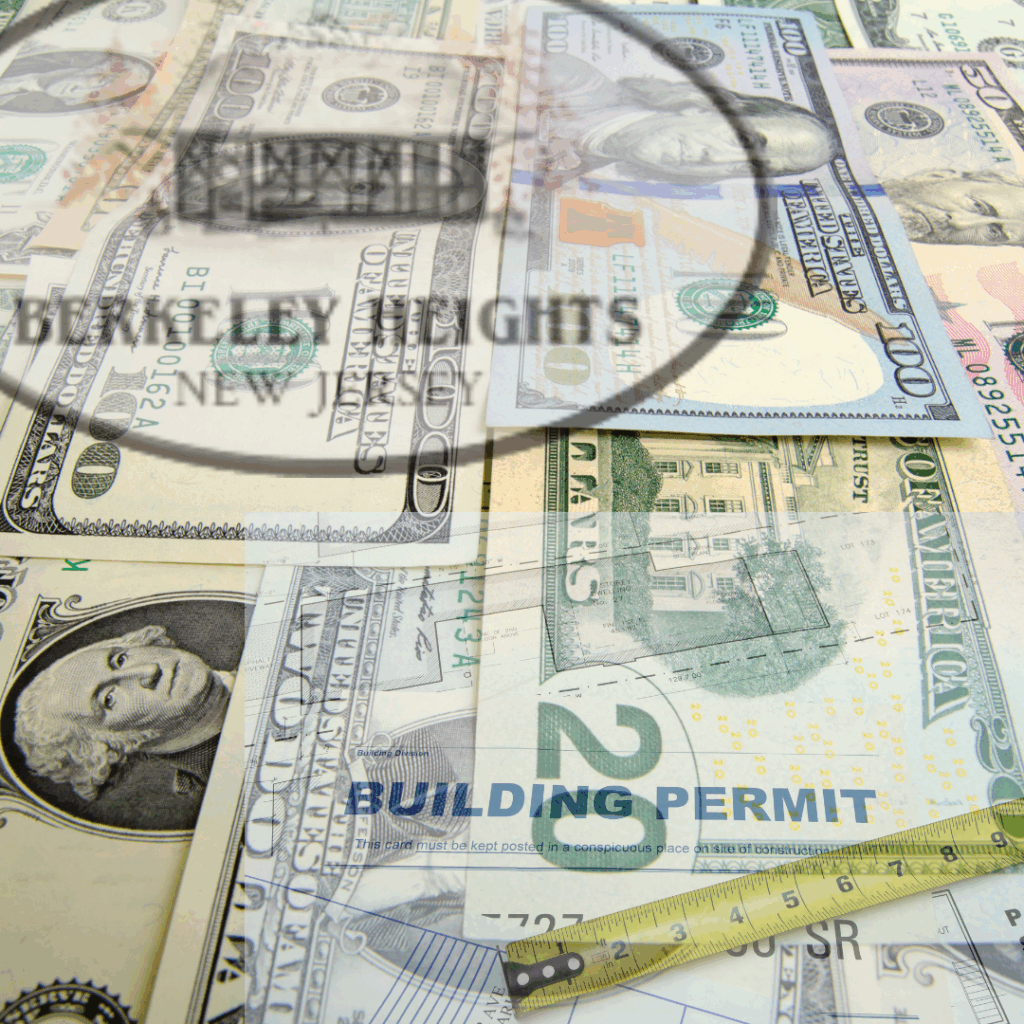
We’ve gotten several emails from residents about last week’s analysis of construction fees collected by the Township — all of them raising important points that add to the conversation.
One resident wrote:
“The fees are supposed to be reasonable and enough to cover costs. If they are generating a lot of excess money in the form of fees, then the fees are unreasonable and should be lowered.”
Another echoed that concern:
“The money appears to be used to go into general revenue so it’s being used to either hold down taxes or to build surplus. Right now the excess fees means that homeowners are being forced to contribute to the cost of local government.”
A third pointed to the state reporting requirements:
“Did you see the Township Audit 2024–25? They have to file a report to the state of how much the Township took in from Uniform Construction Code enforcement and how much was spent. You cannot significantly take in more than what you spend. It’s a service the Township provides and cannot jack up the fees far more than they actually spend. What’s happening is they’re diverting the fees into the general fund to keep taxes low. We need to get 3–5 years of reports.”
These responses raise a bigger question: Are we charging too much for construction permits — and where is that money actually going?
Construction fees aren’t supposed to be a hidden tax. They’re meant to cover the cost of running the construction office — inspections, staffing, plan reviews, and code enforcement. But if the Township is consistently collecting far more than it spends, and quietly folding the rest into the general fund, then residents and builders may be footing the bill to help plug unrelated budget gaps.
At the heart of this is a simple request: people want to know where their money goes.
A few basic steps — like publishing several years of UCC revenue and expense reports, and committing to track surplus construction fees more clearly (as suggested in last week’s piece) — would go a long way toward restoring transparency and trust.
In the end, this is about fairness. If you’re paying for a permit, you should be able to trust that your money is being used for what it was intended — not quietly rerouted elsewhere.
Read More About the Berkeley Heights Town Council
Subscribe to NJ21st For Free
Our Commitment to Ethical Journalism
Related Articles

Key Bills Waiting For Governor Sherrill’s Pen
On Hold and Under Fire: Lower Columbia Project Timeline Exposes Friction Between Council and Rec Commission