Being an informed voter is especially important in a special election, particularly one involving a complex and multifaceted set of questions.
The BHPS referendum vote will take place on March 10, 2026. The ballot will feature two separate questions, and voters will be able to vote on each one independently.
The estimated cost of this special election has been reported at approximately $40,000.
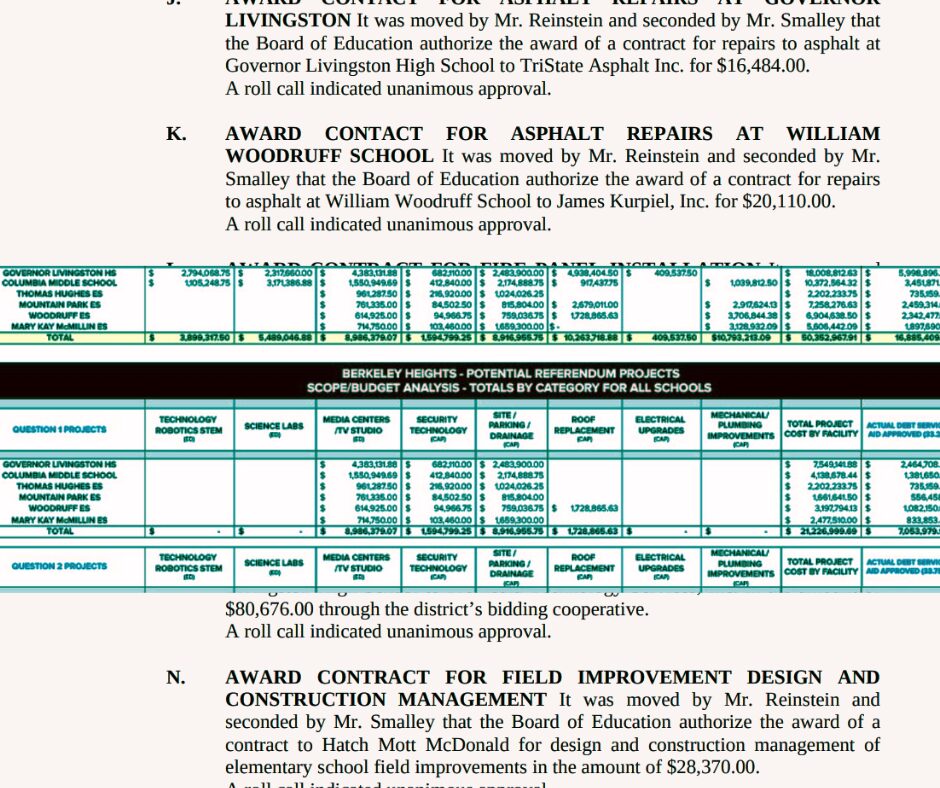
Question 2 also comes with an important contingency: it will not pass unless Question 1 is approved by a majority of voters.
That matters because some people have said they plan to vote yes only on Question 2 because they view those projects as the priority. But that approach can still help advance the full $50 million referendum if Question 1 receives enough support overall.
For example, one voter could vote yes on Question 1 and no on Question 2, while another voter could vote no on Question 1 and yes on Question 2. Taken together, those two separate ballots can end up functioning like overall support for both questions. Because the ballot allows voters to vote on each question independently, a no vote on Question 1 does not prevent someone from also voting yes on Question 2.
I am not sure whether that was intentional or simply a result of how the ballot was structured. But in practical terms, if Question 2 can only pass when Question 1 passes, there is a strong argument that a voter who rejects Question 1 should not also be voting yes on Question 2.
Our goal in covering the Berkeley Heights Public School referendum, as with any major local government decision, is to provide a platform for residents to make informed decisions, share their perspective, and be armed with the right questions to ask.
We hope residents avoid either cheerleading or trashing the referendum — the best approach is to ask hard questions and encourage the BOE and Administration to make changes that better serve the needs of our students while also respecting the economic realities families face in our community.
Our Referendum Hub provides a thorough fact-based analysis of what works and what needs to change.
|
Related Articles
Why I am voting “Yes” on the Berkeley Heights Public Schools referendum
The 2009-2010 Reality Check for the Current Referendum Debate