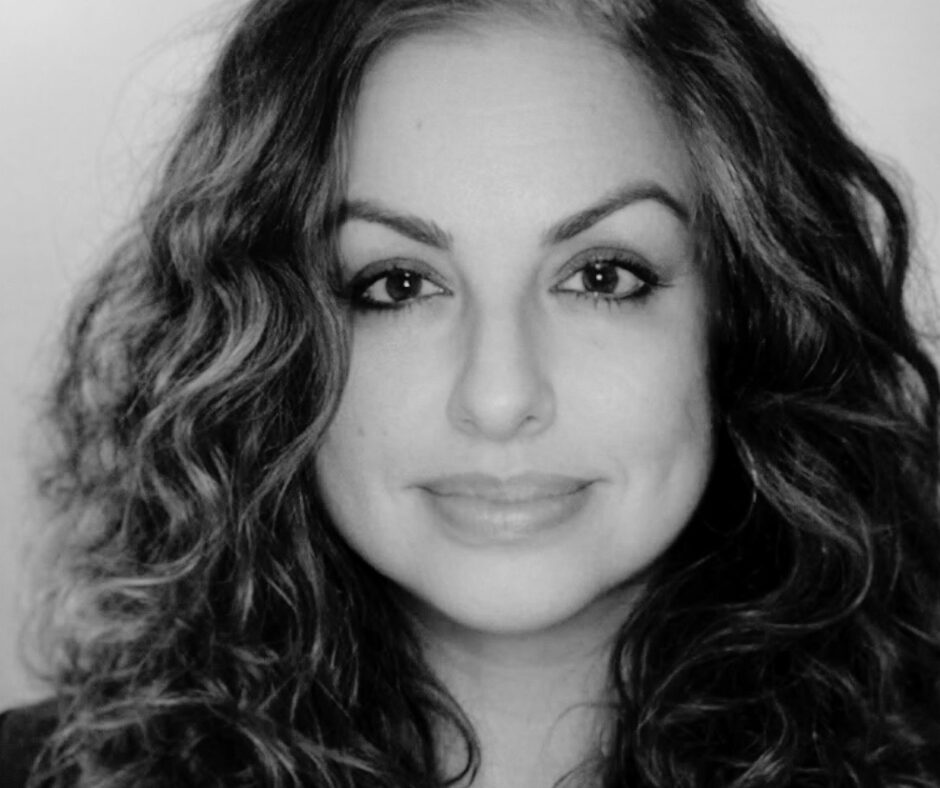
-Eliza Schleifstein is a resident of Randolph
When it Comes to Tense School Board Meetings and Community Interaction, Our School Boards Are the Problem – And Their Own Association Just Said So
The NJSBA’s new “Civility Starts with Us” initiative is a long overdue acknowledgment that incivility at school board meetings (and in some community members’ dealings with school boards outside of those meetings) isn’t just a crowd problem — it’s a leadership problem.
This past week, the New Jersey School Boards Association (NJSBA) launched its “Civility Starts with Us” initiative after recognizing what parents across New Jersey have been living for years.
It is notable that the very professional association to which every school district in New Jersey belongs – and which provides training to thousands of school board members across the state – identified restoring civility to school board governance as a top priority. For years, many individual school boards have played the victim, insisting they are made up of selfless volunteers who are unfairly attacked and bear no responsibility for the breakdown in civility at public meetings and in written communications with constituents. The NJSBA’s initiative sends a clear, uncomfortable message to those boards: the problem isn’t just out there in the crowd. Sometimes, it’s sitting right there at the dais.
The fact that the NJSBA partnered with the Eagleton Institute of Politics at Rutgers University and developed both a formal resolution and a personal pledge for board members to sign speaks volumes about where the association believes the deficiency lies. The NJSBA’s initiative draws on research from the Pew Research Center, the American Bar Association, and the Ronald Reagan Presidential Foundation – all of which found that the majority of Americans believe public discourse has deteriorated and want it to improve. That desire for something better exists in every community in this state. The question is whether our elected school board members are willing to meet it.
When Parents Speak Up, Their Children Pay the Price
In the most troubling cases, the price of speaking up isn’t just wasting your time or being ignored. It’s retaliation — and sometimes, it’s the children who pay for it.
In Atlantic County this year, a father went public with claims that the Buena Regional School District began docking his medically homebound daughter’s attendance record the morning after he challenged district officials at a public board meeting. His daughter had been on home instruction for most of the school year due to medical issues — an arrangement that was working, until he spoke up. The district made no public statement in response, a silence that only deepened community frustration.
In Jersey City, after a mother of a special needs child was arrested and led away in handcuffs at a board meeting, the mayor stated publicly that board leadership had been treating people who disagreed with them with contempt — and that parents were being silenced while their children’s needs went unmet.
In Montclair, a family alleged in a lawsuit that school district officials not only failed to address their child’s ongoing bullying but actively worked to silence the family from speaking out about it.
These are not isolated incidents. Across New Jersey, there are documented reports of:
• Administrators going unresponsive to parents, reporters, or advocates after they raised concerns publicly.
• IEPs suddenly not being followed after a parent speaks at a meeting.
• Disciplinary action against students whose parents have become vocal critics of the board.
• OPRA requests being endlessly delayed or obstructed when the person filing is viewed as a nuisance or adverse to the Board.
The principle could not be more straightforward: board authority exists to serve the community, not to protect the board and school administrators from it. Elected officials do not get to use public power as a loyalty test. They do not get to punish residents for exercising their First Amendment right to speak at a public meeting, demand budget transparency, or organize other parents around a shared concern. When boards do, they are not just being uncivil — they are potentially crossing legal lines, and they are certainly betraying the public trust. The School Ethics Act states, in its very first sentence, that board members are prohibited from using their public office for personal or political gain. Weaponizing institutional authority against critics is a textbook violation of that principle.
The Incivility Isn’t Just Board vs. Community – It’s Happening Inside the Boardroom Too
One of the most corrosive patterns in school board governance is the misuse of institutional authority to reward allies and punish critics – and it isn’t only directed at the public. It happens to fellow board members who refuse to fall in line.
- Committee chair positions quietly steered toward members who will not challenge the superintendent or board president.
- Board members stripped of committee assignments after asking too many questions or dissenting from the majority view.
- Board officers openly hostile in public session toward members who are not in lockstep with administration.
These are not hypothetical scenarios. They are documented, recurring realities in districts across New Jersey. In Randolph, a board member is still waiting,18 months later, for an apology from the board president who cursed at him in closed session. The same board that approves student conduct policies apparently does not apply them to itself. To make it even worse, that Board president happens to be the Associate Director of Professional Development and Instructional Issues at the NJEA – someone who should clearly know better.
The Most Trained Elected Officials in New Jersey Have No Excuse
It is worth pausing on that word: elected. School board members are elected officials. They exercise real governmental authority over some of the most consequential decisions in any community — how children are educated, how millions of tax dollars are spent, who leads school districts, and what values are reflected in the classroom.
They are also, by any measure, among the most comprehensively trained elected officials in the state. The NJSBA provides mandated training, governance academies, legal guidance, policy resources, and ongoing professional development specifically designed to prepare board members for the responsibilities of public service. New Jersey school board members receive more structured training and institutional support than virtually any other category of local elected official in the state.
That training exists for a reason. With authority comes accountability. Board members who have completed governance training, studied the NJSBA’s own materials on community engagement and effective leadership, and still choose to dismiss constituents, punish critics, or weaponize board authority against residents who ask inconvenient questions have no excuse when ethics complaints are filed or when voters show up at the next election in an effort to turn them out. They knew better. They chose otherwise.
Which is precisely why the Civility Project matters — and why its adoption should not be optional.
Any School Board That Doesn’t Adopt the Resolution and Sign the Pledge Just Told Its Constituents Exactly What It Thinks of Them
The Civility Project gives community members a concrete accountability tool — not just a vague call for everyone to be nicer to one another. Residents in every district should bring the NJSBA Civility Resolution before their board and ask for a vote. The response will tell you everything you need to know.
A board that adopts the resolution and signs the pledge is at least willing to be held to a standard. A board that refuses — citing that it isn’t needed, that the community is the problem, or simply tabling the matter indefinitely — has just told the community exactly what kind of board it is. Pay attention to that answer. Those are the boards that need it the most.
The Civility Pledge is not merely symbolic. It is a written, public commitment by an elected official. When a board member who has signed that pledge subsequently rolls their eyes or openly laughs at a constituent who speaks during public comment at a board meeting, retaliates against a parent’s child, ignores years of legitimate correspondence, or uses board authority to reward loyalty and punish dissent – that is a violation. Name it as one. Cite the pledge. Put it on the record. Document everything. Attend meetings. Bring your neighbors. File ethics complaints when conduct warrants it. And when a board refuses to commit in writing to basic civility, make sure every voter in the district knows it before November.
Elected officials who will not hold themselves to the same standards they demand from children and constituents do not deserve to hold those seats.
For years, too many boards across New Jersey have operated as though public service comes with built-in immunity from accountability — as though the people who elected them are obstacles to be managed rather than constituents to be served. The NJSBA’s Civility Project is a formal acknowledgment, from the boards’ own professional association, that this has to change.
The public has done its part by showing up, speaking up, and refusing to be silent. Now it is the boards’ turn to meet them halfway — not because the law requires it, but because the basic obligations of public service do.
New Jersey’s parents are not asking for perfection. They are asking to be heard. They are asking that the people they elected to serve their children’s interests treat them with the same basic dignity those children are taught to show one another in the classroom.
That’s not a high bar. It’s the floor.
Congratulations to the Sparta Board of Education — the first school district in New Jersey to adopt the Civility Resolution, doing so within 24 hours of the NJSBA’s release, and reciting the Civility Pledge together in unison. Let Sparta be the example every other district in this state follows.
Learn more about the NJSBA Civility Project and access the Resolution and Pledge at njsba.org/civility-project. Contact the NJSBA at civility@njsba.org with questions or to share your district’s experience.
Submitted directly by the author; content reflects their own views
Related Articles
NJ Unemployment falls to 4.5% But Payrolls Slip and the Orange Glow Remains
The Eligibility Trap: Inside a Princeton Mother’s Five-Year Fight to Rebuild After Ida