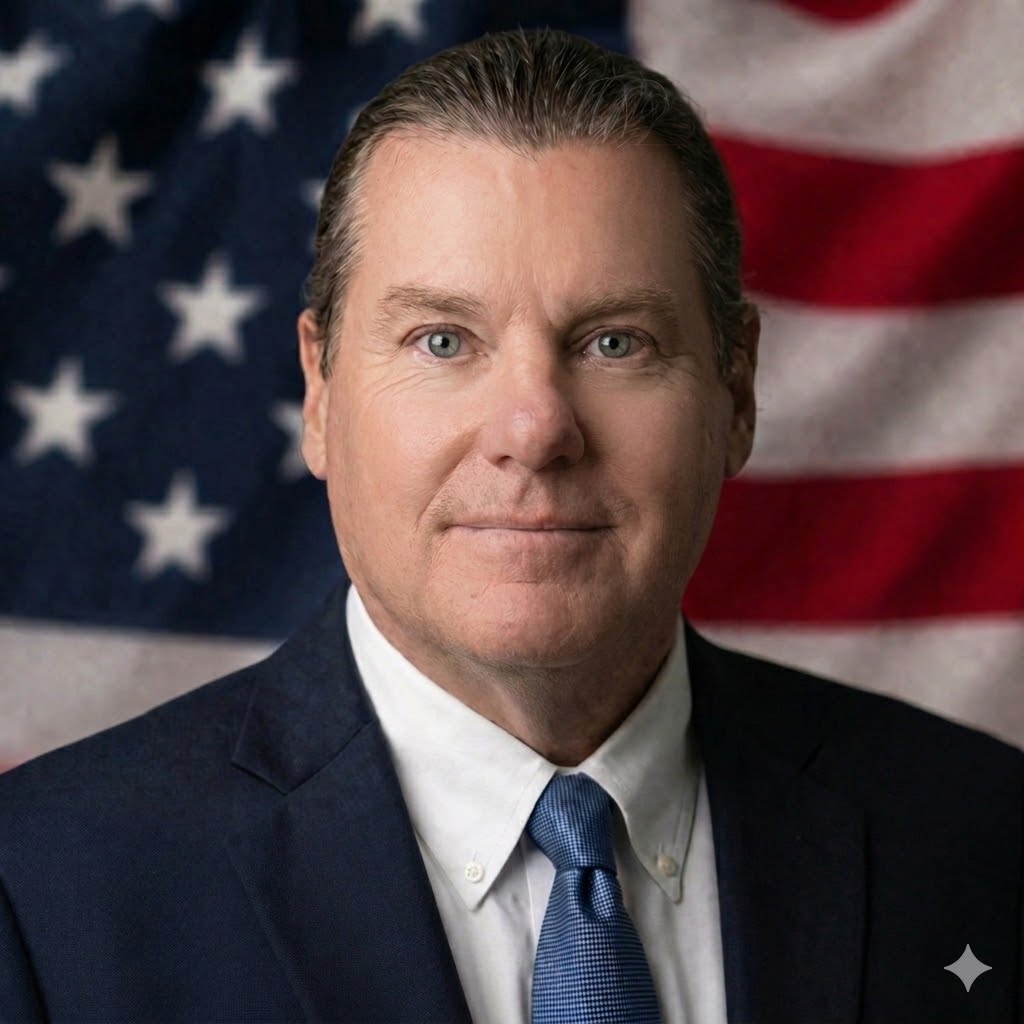
Edmund Maciejewski
Council Vice President Susan Poage recently published an op-ed about Berkeley Heights raising the Pride flag at Town Hall. I respect her right to express her views as a private citizen. I also agree with one basic principle: every resident of Berkeley Heights should be treated with dignity, fairness, and equal protection under the law.
No resident should be harassed, threatened, denied services, denied housing, denied employment, or mistreated because of who they are. That should not be a Republican idea or a Democratic idea. It should be a basic Berkeley Heights value.
But Council Vice President Poage did not publish her comments merely as a private resident. Her article appeared under her official title. That matters.
When an elected official uses an official title to discuss a ceremony conducted by Township officials on public property, residents are entitled to ask a different question: is this personal advocacy, or is this official government speech?
That question deserves an answer.
The role of the Township Council is not to act as a moral instruction board. It is not to curate which causes, identities, symbols, celebrations, or campaigns deserve special recognition from Town Hall. The role of local government is to run the town.
That means roads, flooding, drainage, sewer issues, development, taxes, infrastructure, spending, public safety, transparency, and responsiveness to residents.
Those are the issues people deal with in their homes, on their streets, in their neighborhoods, and in their tax bills.
Against that backdrop, many residents are understandably frustrated when local officials seem more interested in issuing symbolic messages from official positions than listening to residents about the practical problems in front of us.
This issue is larger than one flag.
At the recent ceremony, Berkeley Heights raised multiple additional flags, including the Pride flag, a Portuguese flag, and a World Cup-related flag. Alongside the American flag, POW/MIA flag, New Jersey flag, and municipal or county flags, Town Hall begins to look less like the seat of local government and more like a rotating display board for selected messages, causes, identities, events, and campaigns.
That should concern residents across party lines.
The American flag should not get visually or symbolically lost at Town Hall. More importantly, municipal flagpoles should not become a place where elected officials decide which groups, events, causes, or messages are worthy of official recognition and which are not.
Private citizens are free to celebrate Pride Month, Portuguese heritage, soccer, religious holidays, veterans organizations, civic groups, cultural traditions, and any other cause or community that matters to them. That freedom is part of what makes America strong.
But government is different.
Town Hall belongs to everyone. It should not become a stage for whichever messages current officials personally choose to elevate.
I do not object to Council Vice President Poage saying that every person belongs in the world or should be treated with dignity. That is a decent human sentiment. She is free to say that as an individual.
But why is that the business of the Township Council?
If the message is that every resident deserves equal treatment under the law, then say that. I agree with it.
Every resident deserves equal treatment under the law.
Every resident deserves equal access to municipal services.
Every resident deserves respect from local government.
But that universal message does not require Town Hall to adopt special flags, slogans, ceremonies, or symbolic campaigns selected by elected officials.
Once government starts using public property to send selected messages, basic questions follow.
Who decides which flags are raised?
Is there a written policy?
Did the Township Council vote on it?
Can any group request a flag?
Can religious groups request one?
Can ethnic groups request one?
Can veterans groups request one?
Can civic organizations request one?
Can taxpayer groups request one?
Can sports organizations request one?
Can political causes request one?
If the answer is yes for some groups and no for others, what is the standard?
These are not hostile questions. They are good-government questions.
Berkeley Heights has also appeared to use different Pride-related symbols in different years. In prior years, the Township promoted or displayed the Progress Pride Flag, which carries meanings beyond the traditional rainbow Pride flag. This year, the Township appears to have returned to the traditional rainbow Pride flag.
Was that change intentional?
Who made that decision?
Was there a public discussion?
Was there a policy guiding the choice?
Again, these are fair questions. If these symbols are important enough to be raised by Township officials at Town Hall, then residents deserve to know what the symbols mean, who approved them, and what standard applies to other requests.
Council Vice President Poage’s op-ed frames the Pride flag as a message of love, unity, visibility, awareness, and belonging. Many people may sincerely see it that way.
But sincerity is not the issue.
The issue is whether local government should be in the business of selecting and promoting moral, cultural, or political messages at all.
A town government should not need to prove its fairness through selective symbolism. It should prove its fairness through action: by serving every resident equally, responding to resident concerns, maintaining infrastructure, managing tax dollars responsibly, protecting neighborhoods, and making decisions in the open.
That is what residents need from local government.
They do not need elected officials using official titles and public property to promote personal causes while ordinary concerns are pushed aside.
The message from Berkeley Heights government should be simple and universal: this town serves all residents equally.
That includes gay residents, straight residents, Portuguese residents, non-Portuguese residents, soccer fans, non-soccer fans, religious residents, nonreligious residents, Republicans, Democrats, independents, and everyone else who calls Berkeley Heights home.
The question is not whether people deserve dignity. Of course they do.
The question is whether the Township Council should be promoting selected moral and cultural messages while many residents feel unheard on flooding, sewer problems, roads, overdevelopment, taxes, and other core municipal responsibilities.
If Berkeley Heights wants to continue raising non-governmental or special-recognition flags, then the Township should adopt a clear written policy in public. Residents should know what flags are allowed, who may request them, who approves them, and what standards apply.
Without that kind of policy, these decisions can look arbitrary, selective, and political.
Town Hall should not be used as a stage for personal advocacy by elected officials.
It should be used to conduct the public’s business.
Equal treatment under the law does not require Town Hall to adopt every symbol, cause, or campaign that elected officials support.
It requires government to treat every resident fairly and focus on the job residents elected it to do.
That should be enough.
This statement was submitted by the candidate and does not necessarily reflect the editorial position of NJ21st.
See Our Policy on Political Endorsements, Candidate Statements and Editorial Independence
Related Articles
Emails Obtained Through OPRA Undercut Berkeley Heights Council Claims on Terrace II PILOT

Tensions Boil Over in Berkeley Heights: Absent Mayor, Data Center Debates, Questionable Police Expansion and Heated Exchanges