The second in our series Correcting the Council-Aligned Narrative Misinforming Our Community
Following our Part 1 analysis and my comments at last night’s Town Council meeting, another council-aligned counter-narrative has suddenly emerged, now framing the Township’s refusal to provide PILOT dollars to the District as a “structural problem.”
The messaging is clearly coordinated, but the marketing doesn’t beat the math or mask the continued glaring omissions.
Let’s again remember what PILOTs are – arrangements with developers that allow them to avoid supporting schools by entering into agreements with the Township. That means the burden every working family and senior carries in supporting our schools is not shared by developers profiting from the housing they are constructing that holds students in need of educational services.
The falling enrollment argument
Yes, enrollment is down – this is something we’ve reported time and time again, but this is only material when it comes to discretionary spending – there is a universe of cost when it comes to schools that doesn’t immediately drop when enrollment falls – we covered this extensively in our ‘Know Your NJ Government’ articles on school budgets. Citing a drop in enrollment as a basis for not providing funding demonstrates a fundamental misunderstanding of school budgets.
The meaningful arguments connected with falling enrollment have more to do with discretionary spending and mid- to long-term planning – it’s not the economic reality of today – school districts cannot be that nimble based on how they are structured.
According to the Township’s April 16 response, PILOT developments currently contribute 57 students total, including students requiring Special Education services and Multilingual Learner services.
This means that a portion of students coming from PILOT developments fall into higher-cost mandated categories – yet the narrative relies on a simplified $22,000 per-pupil estimate.
If you recall, the Council-aligned source put the annual cost at approximately $1.631 million, reporting that the District calculated the figure using 57 students at $22,000 per pupil, plus 19 students requiring special education services and 7 students receiving multilingual learner services. But the newly obtained OPRA response says the PILOT developments currently contribute 57 students total, including students requiring special education and multilingual learner services, raising questions about how that public estimate was presented.
This isn’t “nuance.” – it’s a claimed recurring obligation of approximately $1.63 million annually tied directly to these developments.
The ‘already committed’ argument
But the omissions and questions surrounding the public cost presentation are only one part of the problem with the narrative – the Township’s central argument is that every dollar of the projected $88.8 million in PILOT revenue through 2054 is already accounted for in debt service for the Municipal Complex.
This is a rather astonishing claim, and it points to where the outcome in refusing to share PILOT dollars is really coming from – it’s not legal handcuffs but a policy choice. It is not legally impossible to change course on how those funds are used, and the Township’s own bond counsel (who, interestingly, was a primary source for the narrative) acknowledges this.
Ultimately, it comes down to the argument of “Well, we prioritized a Municipal Building over classrooms, and we think we’re going to stick with it because we want to.”
The ‘unchangeable’ relic argument
The council-aligned narrative frames the PILOT structure as an unchangeable relic of the past – however, the public record is pretty clear that the folks who created this arrangement knew what they were doing.
Again, Council Member Medeiros, during his initial run for office, correctly identified that the PILOT agreement “is a great deal for the developer, but one which loses revenue for the Board of Education.” He recognized the problem when he was seeking your vote – has his position changed?
And again, the 2018 assurance from then-Councilman, and former BOE member/President, D’Aquila, that there would be “no measurable impact” on enrollment has been proven mathematically false by the District’s current data. The “seat at the table” the Township claims the Board had years ago had people who bought into the bad projections sitting in those seats.
Then there’s the shell game
Then there’s the “Connell and Carriages gives the District money” argument.
Yes.
That’s called paying taxes.
It’s not a gift from the Township – it’s what NJ requires, and it doesn’t cancel out the students whose educations are not being supported by PILOTs.
Just wrapping this up – the record shows this whole arrangement wasn’t an accident.
Prior commitments were made, those commitments now control the revenue, and the school district is left managing the bill.
Whether developer dollars not supporting the students that live in PILOT properties is fair to students, working families, seniors, or our schools is something Berkeley Heights residents need to decide.
Correction: An earlier version of our cost discussion relied on the student breakdown as presented by the Council-aligned source, which reported that the annual estimate was based on 57 students at $22,000 per pupil, plus 19 students requiring special education services and 7 students receiving multilingual learner services. The Township’s April 16 response instead states that the PILOT developments currently contribute 57 students total, including students requiring special education and multilingual learner services. Our revised language reflects that discrepancy in the record.
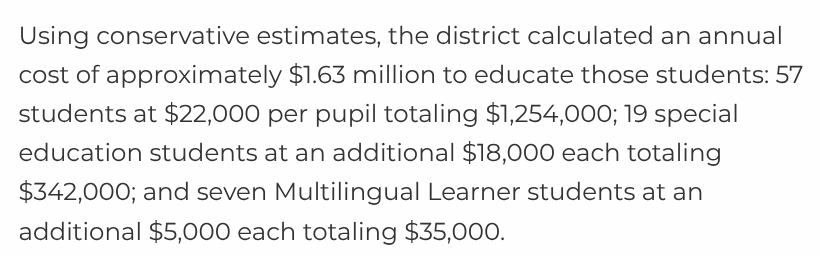
Photo Credit: Billy Baque
The Berkeley Heights PILOT Problem
This article is part of NJ21st’s ongoing investigation into PILOT agreements, school funding pressure, and the decisions shaping Berkeley Heights.
View the Full Series →
Related Articles
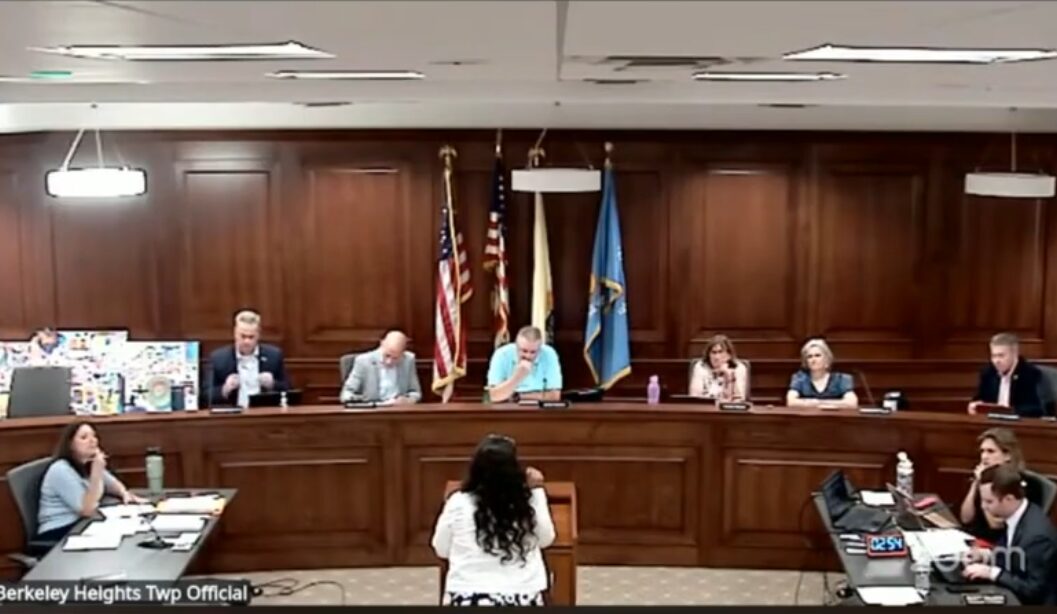
NJ21st Follow-Up: Council Conduct and PILOT Discrepancies Under Scrutiny

BeOne Medicines Becomes Latest Recipient of Next New Jersey Manufacturing Tax Credits